Wednesday, February 18, 2015

Am I the only one who thinks a standing rice scoop is a revolutionary invention?!

Japanese people eat rice every day. Like rice is common this in Japan, rice scoopers are common.

Rice scoopers used to be made from woods, though they are hard to clean as rice sticks on. Consequently plastic rice scoopers became famous. But when you put a rice scooper, pieces of rice sticks on a table or a counter top, and people didn’t like it. So next people started to use a rice cooker with a small pocket to keep a rice scooper. Some people used a plate or something to put a rice scooper.

And then somebody (I don’t know who) invented a revolutionary rice scooper: a standing rice scooper! A rice scooper itself stands, so people don’t get annoyed by which I mentioned above. Amazing (to me!). It’s very convenient, and I love it. Now standing rice scoopers are so popular in Japanese people.


By the way a standing rice scooper works for only sticky rice.


Tuesday, February 17, 2015

Smoothie has been getting popular and popular in Japan

Now many Japanese people drink smoothie to keep a healthy body and skin. Raw vegetables and fruits are normally used to make smoothie. But now there are many kinds of powder for smoothie sold in Japan. What you need to do is that you just mix powder with water/milk.

Powders for smoothie usually have more nutrition than using raw veggies/fruit as those powders are made by many kinds of veggie and fruit. So people can take good nutrition easily and cheaply.

And using powders is very convenient: people can take it anywhere like work and make smoothie quickly when you want.


Do people in your country drink smoothie? If so how they make smoothie?


Monday, February 16, 2015

Yes, it is difficult to use chopstick at first. Kids use chopsticks with aid

To use chopsticks is not easy thing even Japanese.
Yes, nobody can use them well at first, like children.

There are chopsticks for kids which has aid with it.
Children practice to use them from about 2-3years old and they are able to use them well in kindergarten.


Sunday, February 15, 2015

A sliding shutter door protect people in Japan

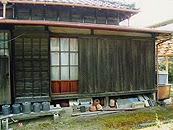
Most of Japanese houses have sliding shutter doors by windows. A sliding shutter door is very important and it protects people from storms like a typhoon, a tornado, a strong wind, and thieves trying to break in a house. It’s also used as an insulater.

A sliding shutter door is made light woods, right iron plates, and aluminum plates, etc (We don’t see wood sliding shutter doors much anymore though). They are strong enough to protect the house from calamities. And people can lock then only from inside of the house, so it’s difficult for thieves to break in from outside.


All sliding shutter doors are used to be opened/closed by hand, but now there are many automatic sliding shutter doors. 


Saturday, February 14, 2015

You can get so many Japanese snacks at “Glico-ya”

Do you know the company Glico? Glico makes so many snacks, and there are some of its products in other country. Maybe you might have heard “pocky.” Pocky is one of Glico’s famous products.

Of course there are snacks of Glico any stores in Japan, but there are stores which only have Glico’s product called Glico-ya. There are 15 Glico-ya in Japan.

In Glico-ya you can get not only regular snacks of Glico but also you can get snacks which are sold only in Glico-ya.


If you have a chance to come to Japan, I recommend to come visit one of Glico-ya. You will have fun.


Friday, February 13, 2015

Ken Shimura – famous Japanese comedian

Ken Shimura is 64 years old Japanese comedian.
He is a member of a comedy group called “ The Drifters”.

His gag is varied. One of the popular one is “Ai-n”.
“Bakatono” (donkey king) is also famous too which is a comedy show of donkey king.


Even decades has been passed from the pinnacle of his popularity, kindergarten children know and love his gag. 


Thursday, February 12, 2015

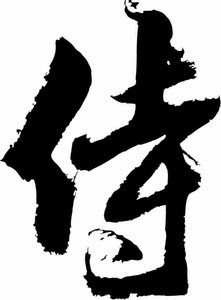
Do you know how many kanji in Japanese?

Japanese has three characters: hiragana, katakana, and kanji. Hiragana and katakana has 46 alphabets/each. That’s easy to remember, isn’t it?

How about kanji?

It’s said that Japanese kanji has over 50,000! Can you believe that?!

Japanese people learn about 2000 of kanji in a compulsory education. But people who go to high school and college learn more.


It’s said remembering kanji is the hardest thing to learn Japanese for people who don’t grow up in Japan. Do you know any of kanji?